Key takeaways
- Under the Nigeria Tax Act 2025, an individual is resident if any one of several tests is met, including spending 183 days or more in Nigeria in the 12-month period.
- Residents are taxed on worldwide income. Work done in Nigeria is generally taxable in Nigeria even when the employer is abroad.
- Expatriates on a Nigerian payroll pay PAYE on the same bands as Nigerian staff.
- Double tax treaties can change the result. Take advice for each case before relying on an exemption.
Nigerian employers hire expatriates for skills that are scarce locally, and multinationals second staff into Nigeria for projects. Both raise the same question: where and how is that person taxed? The tax reform Acts that took effect on 1 January 2026 restated the residence rules. This guide sets out what employers need to know, and where to take advice.
When an individual is tax resident in Nigeria
Meeting any one test makes an individual resident for the year, according to Mondaq's summary of the Nigeria Tax Act 2025.
Residence under the Nigeria Tax Act 2025
Residence decides how much of a person’s income Nigeria can tax. A resident individual is taxed on worldwide income. A non-resident is taxed only on income from Nigerian sources, which includes pay for work done in Nigeria.
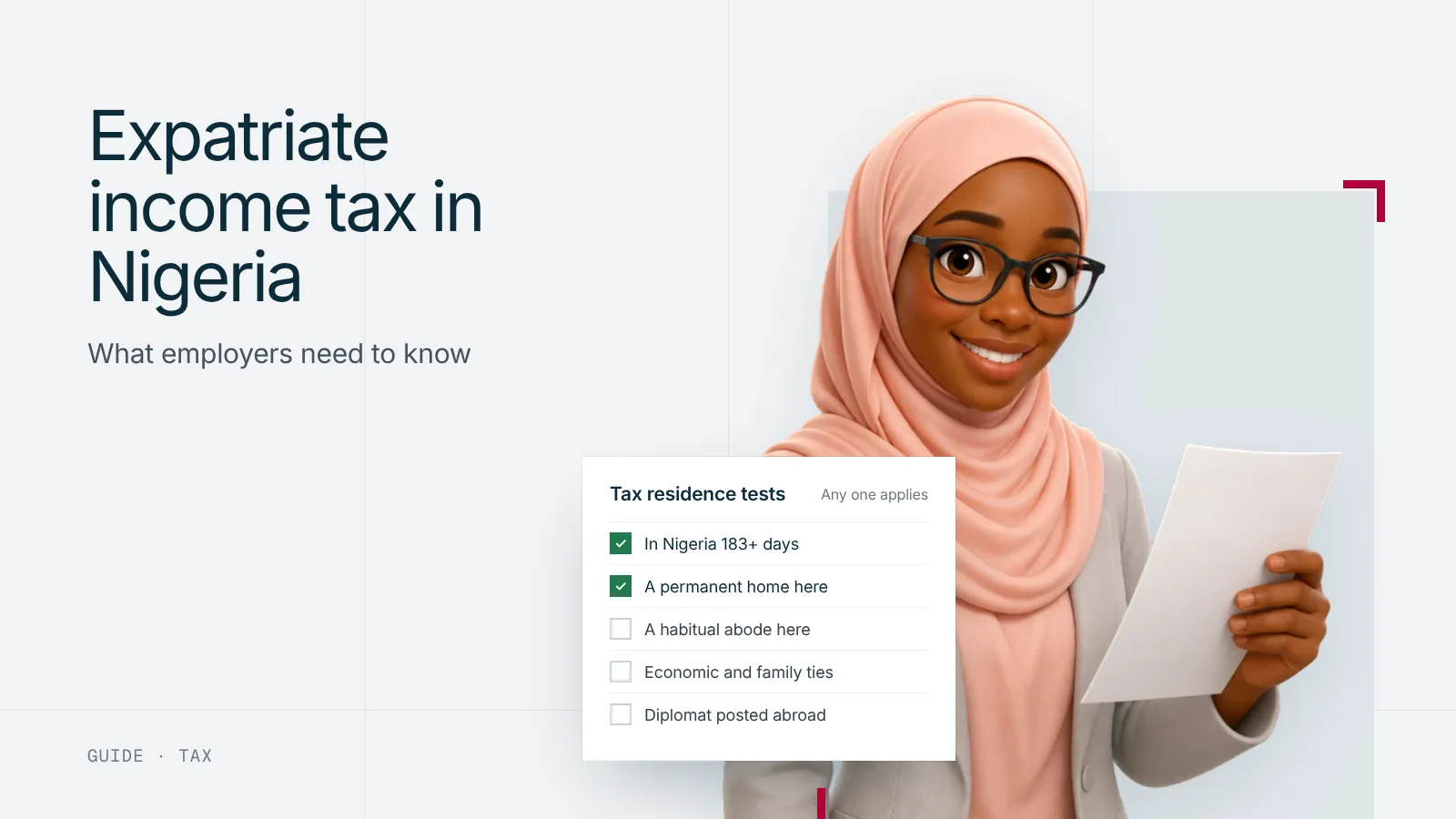
According to Mondaq’s summary of the Act, an individual is resident for a year of assessment if any one of these applies:
- They stay in Nigeria for 183 days or more within the 12-month period covered by the year of assessment.
- They have a permanent home in Nigeria for domestic use.
- They have a place of habitual abode in Nigeria.
- They are Nigerian and earn employment or business income wholly or partly in Nigeria.
- They have substantial economic and immediate family ties in Nigeria.
- They are a diplomat, diplomatic agent or Nigerian government employee posted abroad.
Residence includes staying in Nigeria for “183 days or more within the 12-month period covered by the year of assessment.”
Nigeria Tax Act 2025, as summarised by Mondaq
The summary also notes that intention to reside is no longer a factor. An expatriate with a permanent home or habitual abode in Nigeria is resident even if they plan to leave.
Work done in Nigeria for a foreign employer
Many expatriates in Nigeria are employed by a parent company abroad and seconded to a Nigerian affiliate. The tax reform Acts treat a person who performs duties in Nigeria, even for a foreign employer, as resident in Nigeria for those duties. Only work done entirely outside Nigeria, apart from brief visits, is treated as foreign employment.
In practice:
| Arrangement | Likely Nigerian tax position | What to check |
|---|---|---|
| Hired by the Nigerian company and paid in Nigeria | PAYE through the Nigerian payroll | Residence, benefits in kind, housing |
| Seconded, paid abroad, working in Nigeria | Taxable in Nigeria for duties performed here | Who operates PAYE; recharge arrangements; treaty position |
| Regional role, mostly abroad, short visits to Nigeria | Possibly not taxable in Nigeria | Days in Nigeria, where duties are performed, treaty |
| Remote worker living in Nigeria, foreign employer | Resident in Nigeria; taxable on worldwide income | How tax is paid when no Nigerian payroll exists |
The summary does not define “brief visits”. Track days in Nigeria for every mobile employee and take advice when the pattern is close to the line.
PAYE for expatriates on a Nigerian payroll
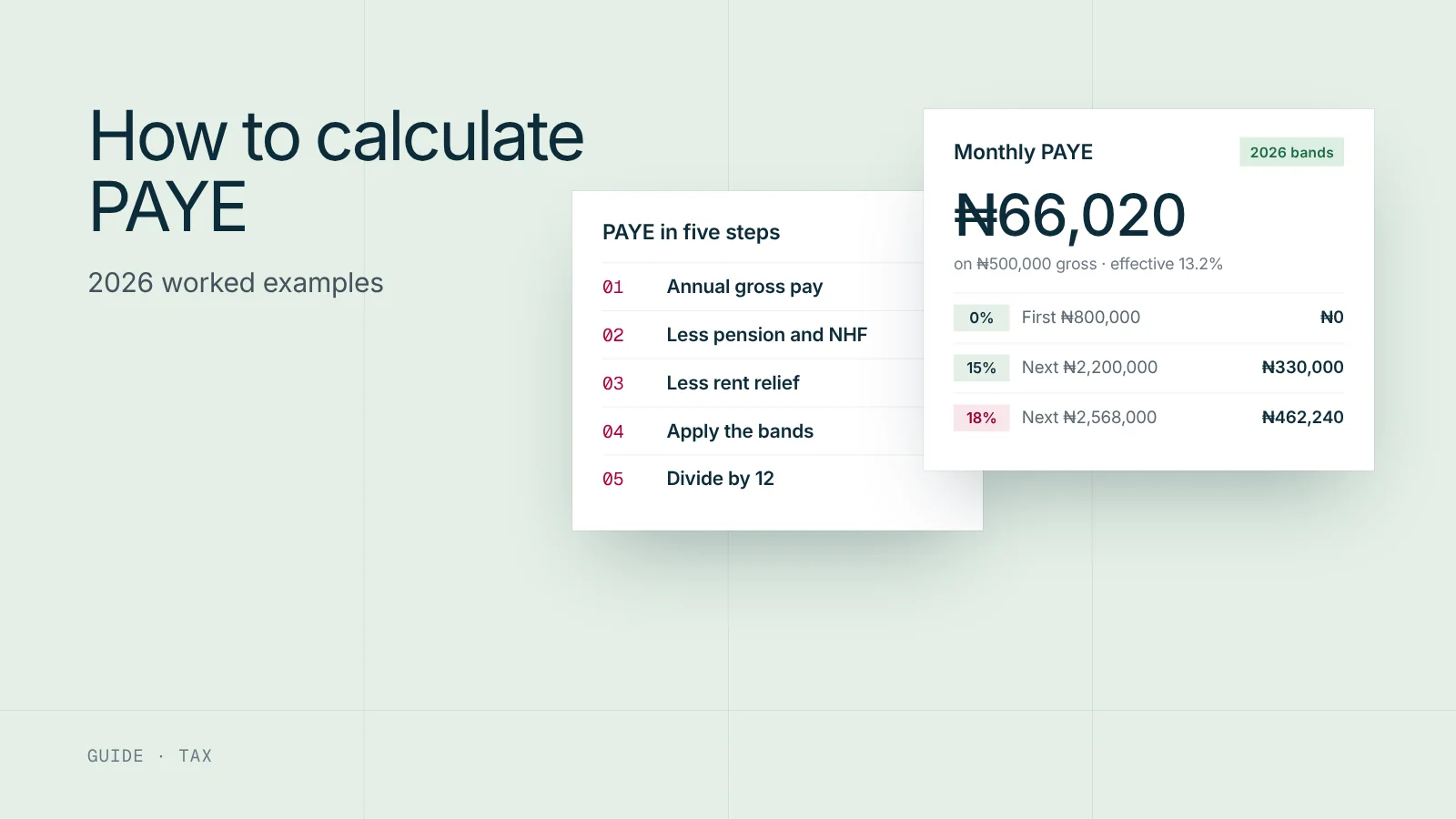
An expatriate employed and paid by a Nigerian company is taxed like any other employee. The same Nigeria Tax Act 2025 bands apply, with no separate expatriate rate. The difference is usually the size of the package and how much of it comes as benefits.
| ₦5,000,000 a month | With 8% pension | Without pension |
|---|---|---|
| Annual gross pay | ₦60,000,000 | ₦60,000,000 |
| Pension deduction | ₦4,320,000 | ₦0 |
| Taxable income | ₦55,680,000 | ₦60,000,000 |
| Monthly PAYE | ₦987,500 | ₦1,077,500 |
| Effective PAYE rate | 19.8% | 21.6% |
Both columns assume basic, housing and transport are 90% of pay and no other reliefs. Income above ₦50,000,000 a year is taxed at the top rate of 25%, so senior expatriate packages often reach the top band. Use the PAYE calculator for other figures.
Pension for expatriate staff
Whether an expatriate must join the Contributory Pension Scheme depends on their circumstances, including cover under a scheme in their home country. Confirm the position with PenCom or your Pension Fund Administrator before you either deduct or leave out pension. The difference changes PAYE, as the table shows.
Housing, cars and other benefits
Expatriate packages often include housing, a car, school fees or home leave flights. Benefits provided because of employment are generally part of employment income. Confirm how each benefit is valued under the Nigeria Tax Act 2025 before you run payroll, and keep the valuation on file.
Pay in foreign currency
PAYE is calculated and paid in naira. If part of the salary is paid in dollars or another currency, convert it to naira the same way every month, record the rate you used, and agree the method with your tax adviser.
Double tax treaties
Nigeria has double tax treaties with a number of countries. A treaty decides which country has the first right to tax employment income and how the other country gives relief, so it can change the result for a seconded or regional employee.
Many treaties follow a common pattern for employment income: pay for work done in a country can be taxed there, with an exemption for short stays when the employee is present for less than 183 days, the employer is not resident in that country, and the pay is not borne by a branch there. The wording differs between treaties, so read the treaty that applies to the employee’s home country rather than relying on the pattern.
Treaties need evidence
To rely on a treaty, the employee usually needs a certificate of tax residence from their home country. Do not stop deducting PAYE on the strength of a treaty until you have advice and the evidence on file.
What employers should do
Five steps for expatriate tax
Decide the residence position
Apply the residence tests at the start of the assignment and each January, and record the result.
Track days in Nigeria
Keep a log of arrival and departure dates for every expatriate and mobile employee.
Set up payroll correctly
Put expatriates employed in Nigeria on the Nigerian payroll, with PAYE remitted to the state where they live.
Check pension and benefits
Confirm pension status and benefit valuations before the first payroll run.
Take advice on secondments
Where pay comes from abroad, agree who operates PAYE and keep the secondment and recharge documents.
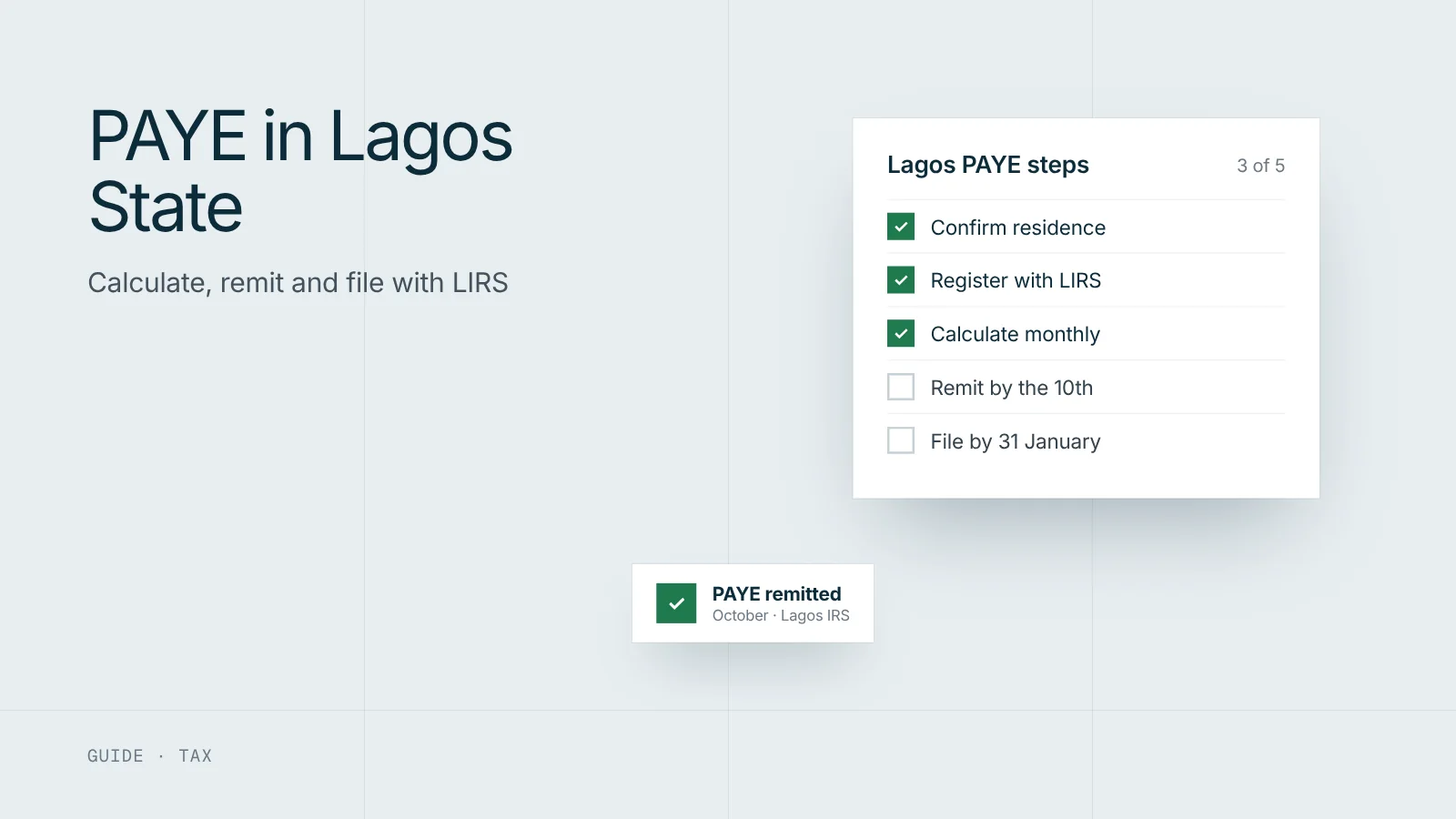
PAYE for an expatriate goes to the state where the expatriate lives, like any other employee. For Lagos residents that is LIRS. See PAYE in Lagos State.
Immigration is a separate question
Tax and immigration run on different rules. Employing a foreign national also needs immigration approvals, such as an expatriate quota position and a residence permit. Confirm the current requirements with the Nigeria Immigration Service and the Federal Ministry of Interior. Paying tax correctly does not cover a missing permit, and a valid permit does not settle the tax position.
Expatriate tax checklist
Before the assignment
During the assignment
Each year
Ticks are saved in this browser only.
Run payroll with Paystat
Process payroll with structured, consistent calculations and a full history of every pay cycle.
Written for: HR at multinationals
Run payroll with Paystat
Process payroll with structured, consistent calculations and a full history of every pay cycle.
Sources
Frequently asked questions
Short answers to what employers ask us most about this topic.
Do expatriates pay tax in Nigeria?
Yes. Expatriates employed in Nigeria pay PAYE on their employment income at the same rates as Nigerian employees. If they are resident under the Nigeria Tax Act 2025, their worldwide income is taxable in Nigeria, subject to any double tax treaty.
What is the 183-day rule in Nigeria?
An individual who stays in Nigeria for 183 days or more within the 12-month period covered by the year of assessment is resident for that year. It is one of several residence tests; meeting any one of them is enough.
Is an expatriate paid abroad taxed in Nigeria?
If the work is done in Nigeria, generally yes. The tax reform Acts treat a person performing duties in Nigeria, even for a foreign employer, as resident in Nigeria for those duties. How the tax is collected depends on the arrangement, so take advice.