Key takeaways
- Four tax reform Acts were signed on 26 June 2025. The Nigeria Tax Act 2025 sets PAYE rates and reliefs from 1 January 2026.
- The Consolidated Relief Allowance is gone. Rent relief of 20% of annual rent, capped at ₦500,000, replaces it.
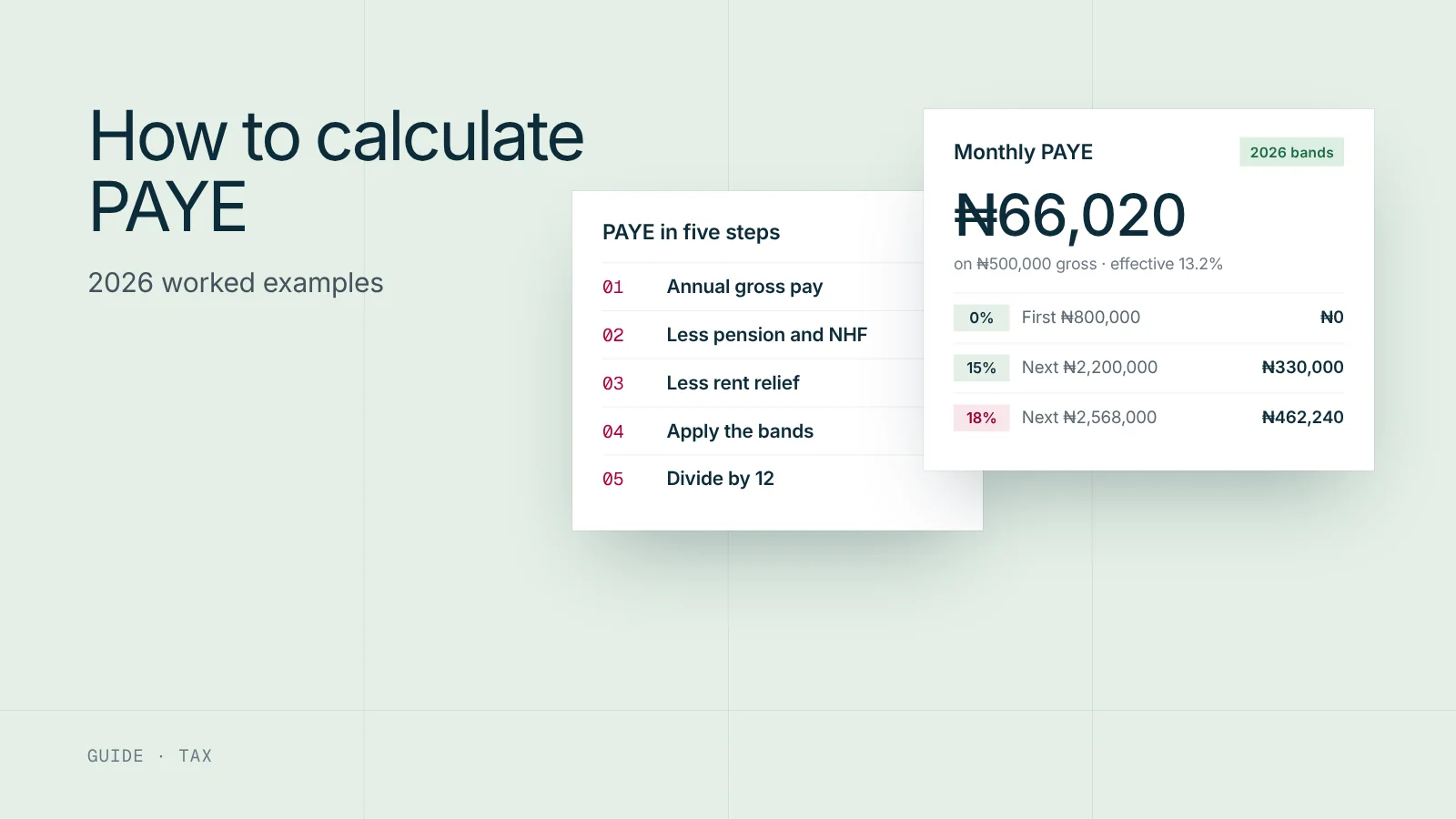
- The new bands start with 0% on the first ₦800,000 of taxable income and rise to 25% above ₦50 million.
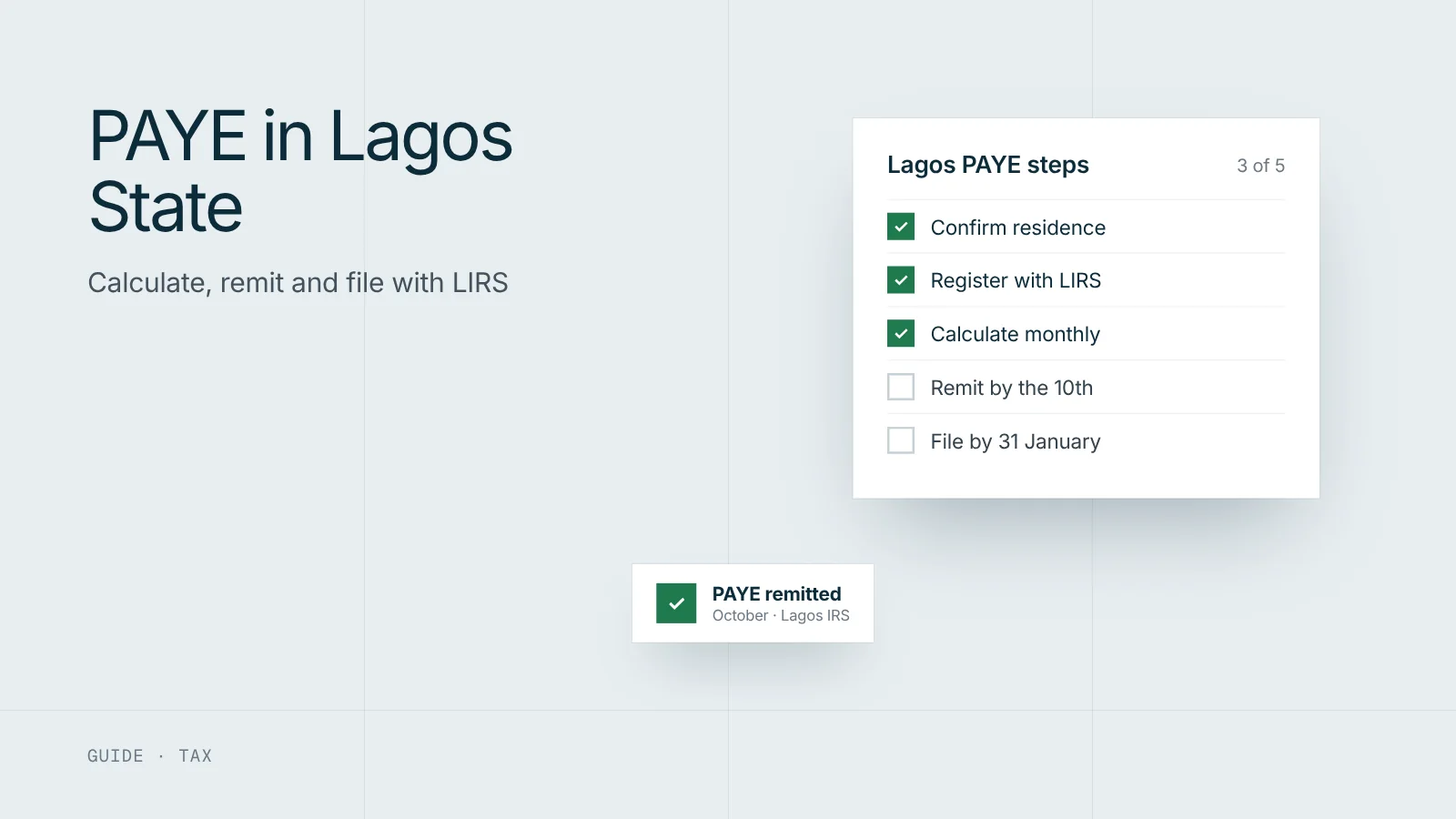
- Employers still remit PAYE by the 10th of the following month and file an annual return by 31 January.
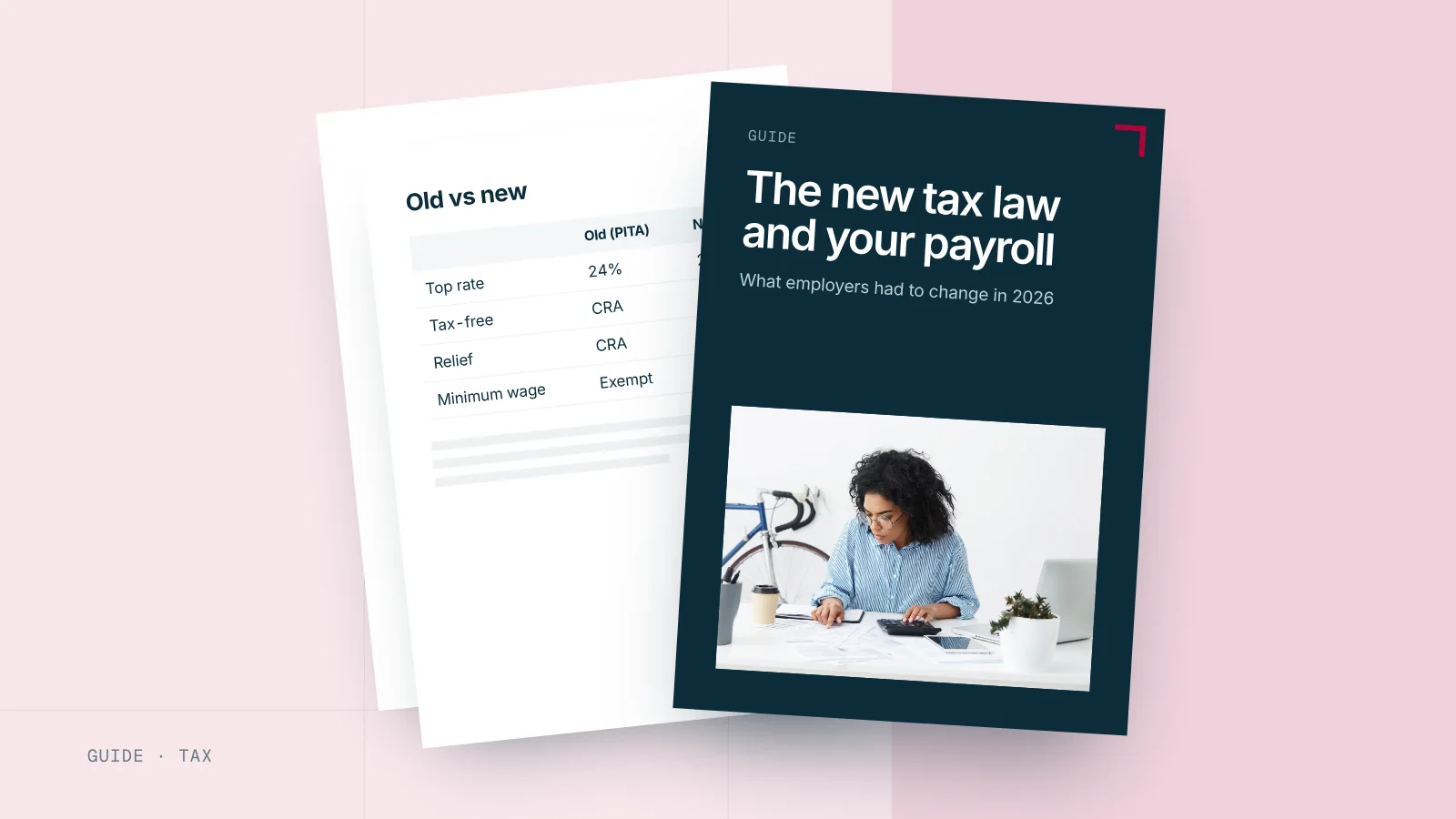
On 26 June 2025 President Bola Tinubu signed four tax reform Acts: the Nigeria Tax Act, the Nigeria Tax Administration Act, the Nigeria Revenue Service (Establishment) Act and the Joint Revenue Board (Establishment) Act. For employers, the first two matter most. They rewrote how PAYE is calculated and restated how it is filed, with effect from 1 January 2026.
This guide is for the people who run payroll. It sets out what changed, what stayed the same, and the checklist to work through if your payroll still carries 2025 logic. For the employee view, see our Insights article on how the new tax law affects your team.
What the new tax law changed for employers
What changed
New PAYE bands
The six bands of the Personal Income Tax Act, from 7% to 24%, are replaced by a new schedule. The first ₦800,000 of annual taxable income is taxed at 0%, and the rates on later slices are 15%, 18%, 21%, 23% and 25%.
PAYE bands before and after 1 January 2026
The Consolidated Relief Allowance ended
CRA was the largest relief for most employees under the old law: the higher of ₦200,000 or 1% of gross income, plus 20% of gross income. It no longer applies. Any payroll formula that still subtracts CRA overstates take-home pay for some staff and understates it for others.
Rent relief arrived
Employees can deduct 20% of the annual rent they pay for their home, up to ₦500,000. It only reaches payroll if the employee tells you and you have evidence, so most employers now ask for rent details during onboarding and at the start of each year.
Minimum wage earners are exempt
Employment income at or below the national minimum wage, ₦70,000 a month, is not taxed.
Allowable deductions are restated
Pension contributions, NHF, NHIS, life insurance premiums and mortgage interest on an owner-occupied home remain deductible. Our step-by-step PAYE guide shows the order in which they apply.
How much each salary changed
The chart compares monthly PAYE under the old and new rules for the same salary, with a standard split and 8% pension. Hover or tap a bar for the figures, or open the table view.
Monthly PAYE under the old and new rules
Same salary split and 8% pension, no other reliefs.
Show the numbers
Source: Nigeria Tax Act 2025, Fourth Schedule (rates) and Section 30 (deductions and rent relief); Personal Income Tax Act (as amended) for the old rules. Assumes basic, housing and transport make up 90% of gross, 8% employee pension on that amount, no rent relief or other reliefs. Rates effective 1 January 2026. Estimates only.
In this comparison, PAYE on ₦100,000 a month falls by ₦1,500 and PAYE on ₦1,000,000 a month falls by ₦3,847. At ₦2,000,000 a month it rises by ₦14,953, and at ₦5,000,000 by ₦143,233. Results for your staff depend on their salary split, rent and other reliefs, so run them through the PAYE calculator before you explain the change.
What stayed the same
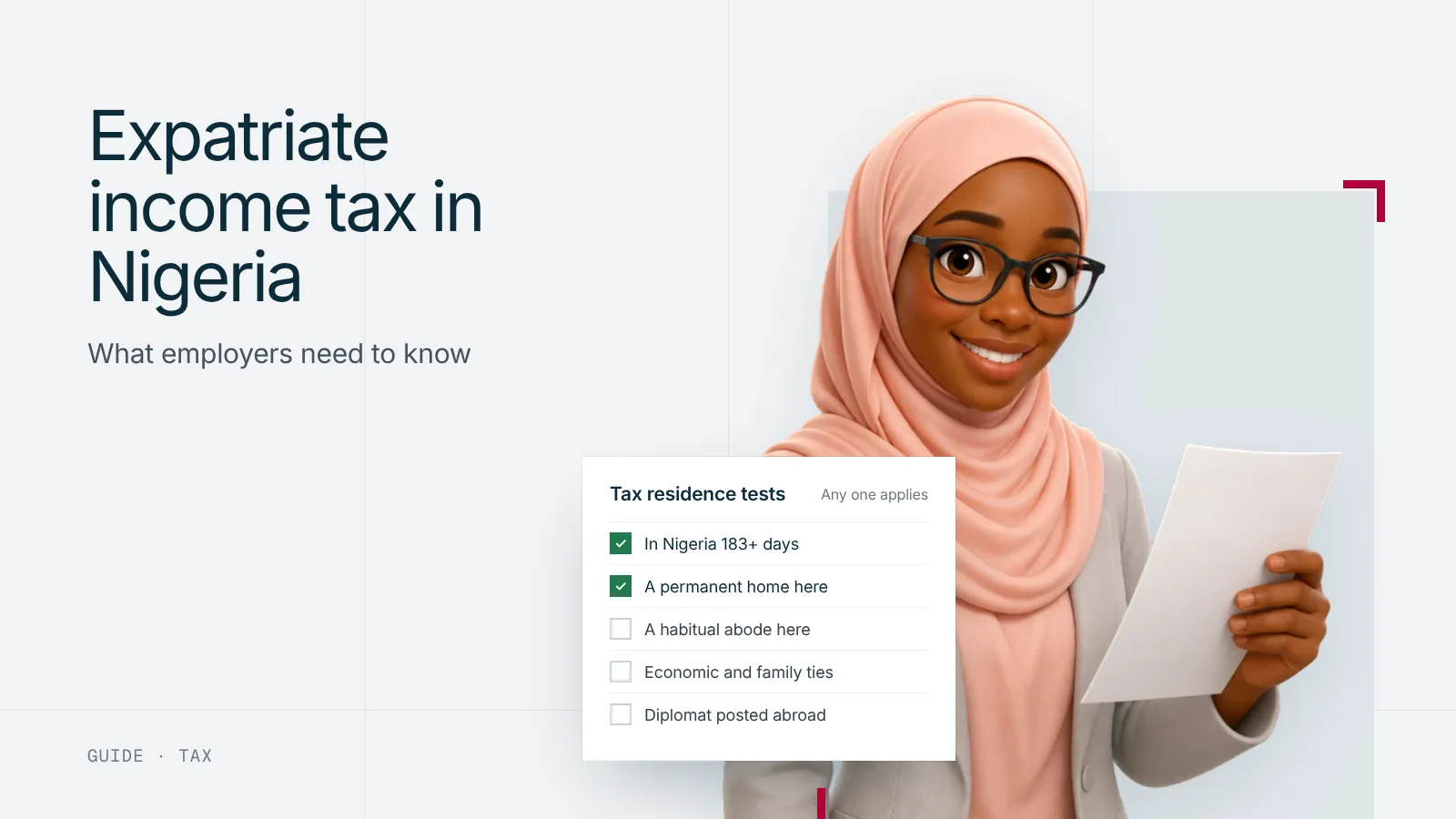
- Who collects PAYE. Tax on employment income is still paid to the state tax authority where the employee is resident, such as the Lagos State Internal Revenue Service for Lagos residents.
- The monthly deadline. PAYE deducted from salaries is due by the 10th of the following month.
- The annual employer return. Employers file a return of each employee’s pay and tax for the previous year by 31 January. LIRS restated the deadline in January 2026 for the 2025 year, citing section 14 of the Nigeria Tax Administration Act 2025.
- Pension, NHF, NSITF and ITF. The reform Acts did not change the separate statutory deductions and levies. Our statutory deductions guide covers them.
LIRS restated in January 2026 that employer returns are due by 31 January every year.
Key dates
The reform timeline for payroll teams
Dates from the reform Acts and LIRS public statements.
- 26 June 2025
Four reform Acts signed
Nigeria Tax Act, Nigeria Tax Administration Act, Nigeria Revenue Service Act and Joint Revenue Board Act
- 1 January 2026
New PAYE rules apply
January 2026 salaries taxed under the Nigeria Tax Act 2025
- 31 January 2026
Employer returns for 2025
The last annual return under the old rules
- 10 February 2026
First PAYE remittance under the new rules
For January 2026 salaries
- 31 March 2026
Individual returns
Deadline for individuals filing their own annual returns
- 31 January 2027
First employer return under the new rules
Covers pay and tax for 2026
Penalties employers should know
The Nigeria Tax Administration Act 2025 makes the employer liable when PAYE is not deducted or not remitted. The employer pays the tax that should have been deducted, a penalty of 10% of that tax, and interest at the Central Bank of Nigeria rate. The penalty applies even if the employee never complains, which is why errors carried over from 2025 formulas matter.
Spreadsheet formulas from 2025
If your payroll runs in Excel, search every sheet for the CRA formula and the old 7% band. Spreadsheets copied forward from 2025 are the most common source of wrong PAYE in 2026. The free payroll template already uses the 2026 rules.
The employer checklist
Work through this list once for the system, and again whenever you onboard a new payroll officer.
System
Staff and records
Remittance and filing
Ticks are saved in this browser only.
Explaining the change to staff
Staff hear about the new tax law from the news and from friends, and many expect a bigger change than they see. Three things help:
- Tell them before payday, with their own figures. A short note showing December 2025 PAYE next to January 2026 PAYE answers most questions.
- Explain rent relief and how to claim it, because it is the one lever employees control.
- Be clear about what has not changed: pension and NHF deductions continue as before.
If you use Paystat, Workstat’s payroll product, ask our team how the 2026 rules are set up for your account. Whatever system you use, test it against the worked examples in our PAYE calculation guide.
Run payroll with Paystat
Process payroll with structured, consistent calculations and a full history of every pay cycle.
Written for: HR, finance leads, business owners
Run payroll with Paystat
Process payroll with structured, consistent calculations and a full history of every pay cycle.
Sources
- Taxation of employment income under the Nigerian tax reform Acts (Mondaq)
- President Tinubu signs four tax reform bills into law (Nairametrics, 26 June 2025)
- Nigeria's changing tax landscape: the tax reform bills have become law (Mondaq)
- LIRS on the 31 January employer return (The Guardian, January 2026)
Frequently asked questions
Short answers to what employers ask us most about this topic.
When did the new tax law start in Nigeria?
The Nigeria Tax Act 2025 and the Nigeria Tax Administration Act 2025 took effect on 1 January 2026. January 2026 salaries were the first to be taxed under the new rules.
Do employees pay more tax under the new law?
It depends on the salary. In Workstat's comparison, using a standard salary split and 8% pension, most salaries up to about ₦1 million a month pay slightly less or about the same, while very high salaries pay more because the top rate rose to 25% and the CRA was removed.
Does the new law change who collects PAYE?
No. PAYE on employment income is still paid to the state tax authority where the employee is resident. The federal tax authority was renamed the Nigeria Revenue Service under the reform Acts.
What happens if an employer fails to deduct or remit PAYE?
Under the Nigeria Tax Administration Act 2025, an employer that fails to deduct or remit is liable for the tax plus a penalty of 10% of the tax due and interest at the Central Bank of Nigeria rate.