Key takeaways
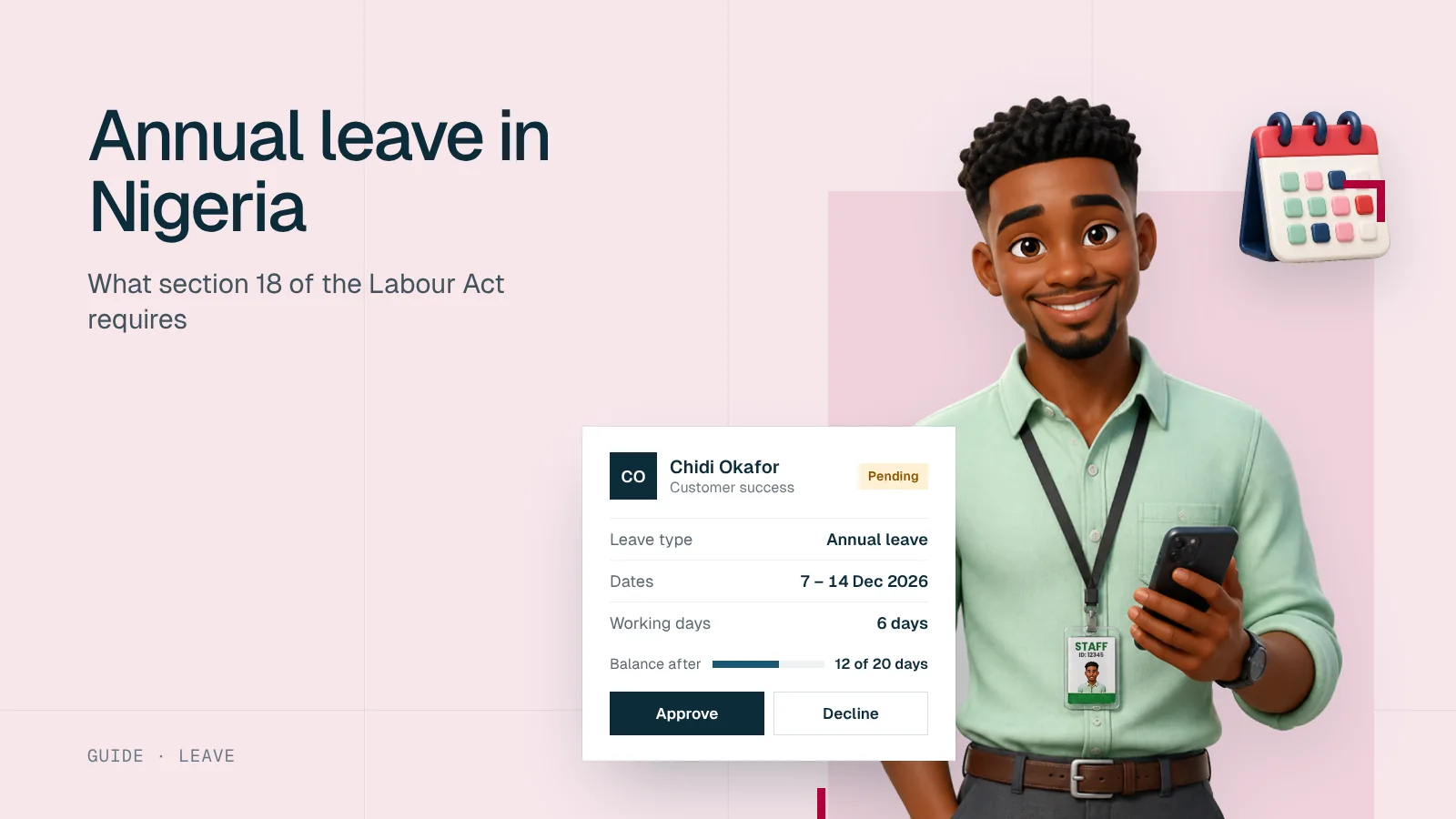
- Section 18 of the Labour Act gives a worker at least six working days of paid holiday after 12 months of continuous service, and twelve working days for workers under 16.
- Leave can be deferred by agreement, but the earning period cannot stretch beyond 24 months of continuous service.
- An employer may not pay wages instead of leave while the contract is in force.
- A worker who leaves after six to twelve months is owed a proportion of one week's pay.
Annual leave is one of the few employment terms the Labour Act sets with a number, and one of the most misunderstood. The legal minimum is low, contracts usually go well beyond it, and the rules on deferral and pay in lieu catch employers out. This guide covers what section 18 says and how to apply it.
Annual leave rules in four numbers
The legal minimum for workers covered by the Labour Act.
The legal minimum
Every worker shall be entitled “after twelve months continuous service to a holiday with full pay of” at least six working days.
Labour Act, section 18(1)
For workers under 16, including apprentices, the minimum is twelve working days. The holiday is with full pay, so a worker on leave is paid as if they were working.
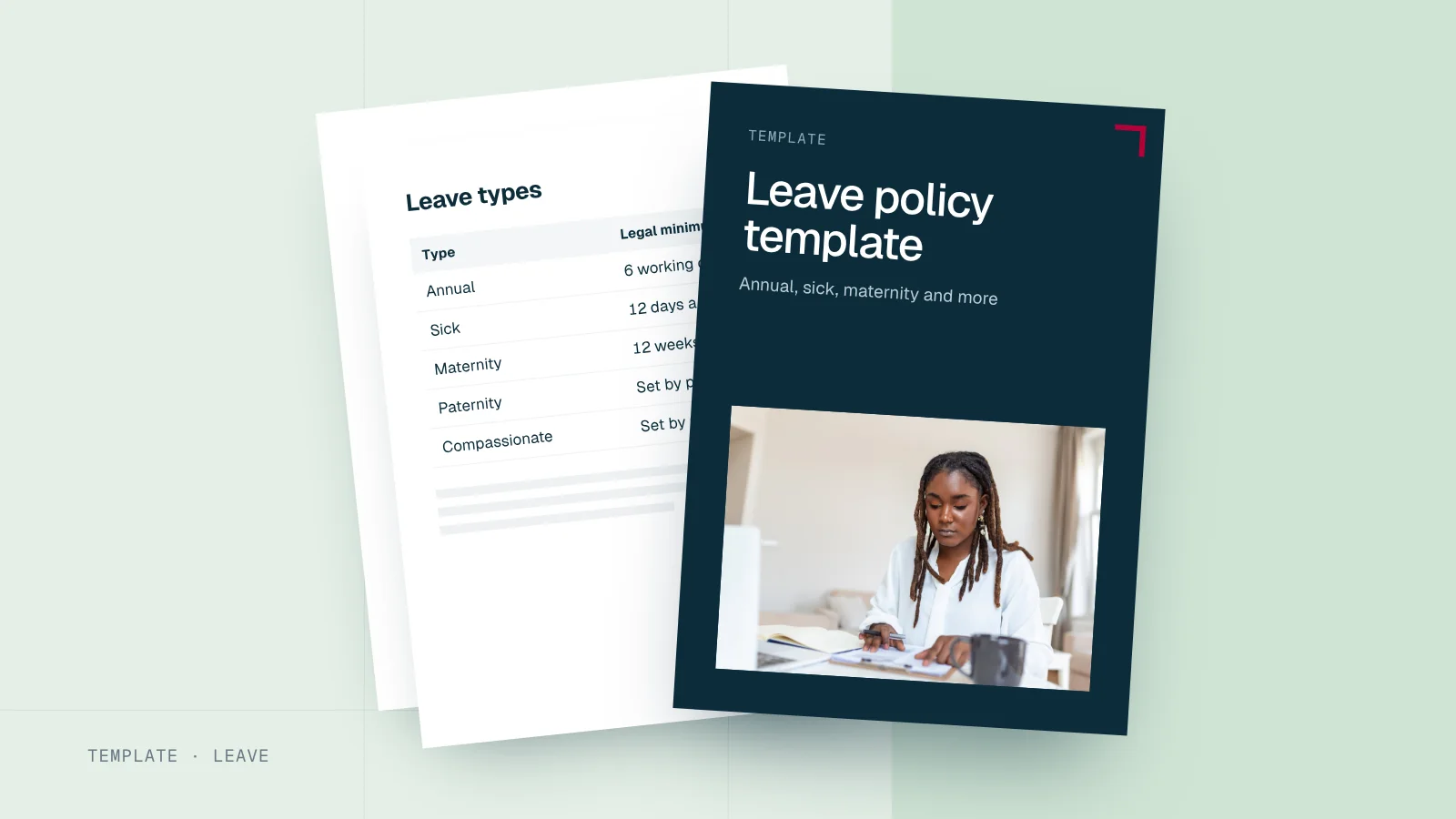
These are minimums. Employers can give more, and once a contract or handbook promises a number, that number is the entitlement. Our leave policy template shows how to write it down.
Who the Act covers
The Labour Act’s protections apply to “workers”. Section 91 excludes people in administrative, executive, technical or professional roles. For managers and professionals, annual leave depends entirely on the contract and handbook, which is another reason to write the entitlement down for everyone. See our Labour Act guide for the full definition.
Deferring leave
Leave can be postponed by agreement between employer and worker, but not indefinitely.
The holiday-earning period “shall not thereby be increased beyond twenty-four months continuous service.”
Labour Act, section 18(2)
In practice, that means a worker cannot be made to go two full years without taking their holiday. Agree any deferral in writing, with the date the leave will be taken.
No pay instead of leave
Some staff would rather have the money, and some employers would rather keep them at work. Section 18(3) closes that door while employment continues: “It shall be unlawful for an employer to pay wages in lieu of the holiday.”
The rule protects rest. If a worker has untaken leave when they leave, the position is different, as the next section explains.
Leavers and pro-rata leave pay
A worker who leaves after at least six months but before completing twelve months is owed a proportion of one week’s pay at their normal rate, in the same ratio as their service bears to twelve months.
| Example | Figure |
|---|---|
| Monthly pay | ₦200,000 |
| One week’s pay (₦200,000 × 12 ÷ 52) | ₦46,154 |
| Months worked since the last holiday year | 9 |
| Pro-rata holiday pay (₦46,154 × 9 ÷ 12) | ₦34,615 |
This is the statutory minimum for workers under the Act. If your contract gives more leave, pay for untaken contractual leave as the contract or handbook says, and include it in the final pay. Our termination guide covers the rest of the final pay calculation.
New starters and leave during notice
Leave for staff who join part-way through the leave year can be worked out pro rata. For an entitlement of 20 working days a year and a start date of 1 April, the first year’s entitlement is 15 days (20 × 9 ÷ 12). Round the result the same way for everyone, and state the method in the policy.
Section 11 of the Labour Act also deals with leave during a notice period. Where an employer gives notice to a worker with three months’ continuous service or more, it does not have to pay for any period of leave it granted at the worker’s own request during the notice. Agree in writing whether leave will be taken during notice or paid in the final salary.
Leave allowance
Some employers pay a leave allowance once a year. It is a contractual benefit, not a Labour Act requirement. If you pay one, state the amount or formula, when it is paid and whether new staff get a pro-rata amount.
Annual leave in the civil service
Federal civil servants’ leave is set by the Public Service Rules, with entitlements that vary by grade level. Since a Head of Service circular in November 2022, all leave in the federal public service is counted in working days rather than calendar days. State civil services have their own rules.
Running annual leave well
Five habits for managing annual leave
Write the entitlement down
State the number of working days, the leave year and any service-based increases in the contract or handbook.
Track balances
Keep a record of days earned, taken and carried over for every employee.
Plan the year
Ask teams to book main leave early so cover can be arranged.
Watch the carry-over
Agree deferrals in writing and keep within the 24-month limit.
Settle on exit
Pay untaken leave in the final salary in line with the Act and the contract.
Decide in your policy whether a public holiday that falls during someone’s leave is added back to their balance, and apply it the same way for everyone. Our public holidays page lists the 2026 dates.
Annual leave checklist
Policy
During the year
On exit
Ticks are saved in this browser only.
Staff asking for leave can use our leave application letter samples.
Employee management made easy
Keep employee records, attendance, leave, payroll and performance in one connected system.
Written for: HR, employees
Employee management made easy
Keep employee records, attendance, leave, payroll and performance in one connected system.
Sources
Frequently asked questions
Short answers to what employers ask us most about this topic.
How many days of annual leave are workers entitled to in Nigeria?
At least six working days with full pay after 12 months of continuous service, under section 18 of the Labour Act. Workers under 16, including apprentices, get at least twelve working days. If a contract gives more, the contract figure applies.
Can annual leave be paid instead of taken?
Not while the contract is in force. Section 18(3) makes it unlawful for an employer to pay wages in lieu of the holiday. Payment for untaken leave arises only when employment ends.
Does the Labour Act apply to managers?
The Act's protections apply to 'workers', which excludes people in administrative, executive, technical or professional roles. For them, leave depends on the contract of employment and the staff handbook.