Key takeaways
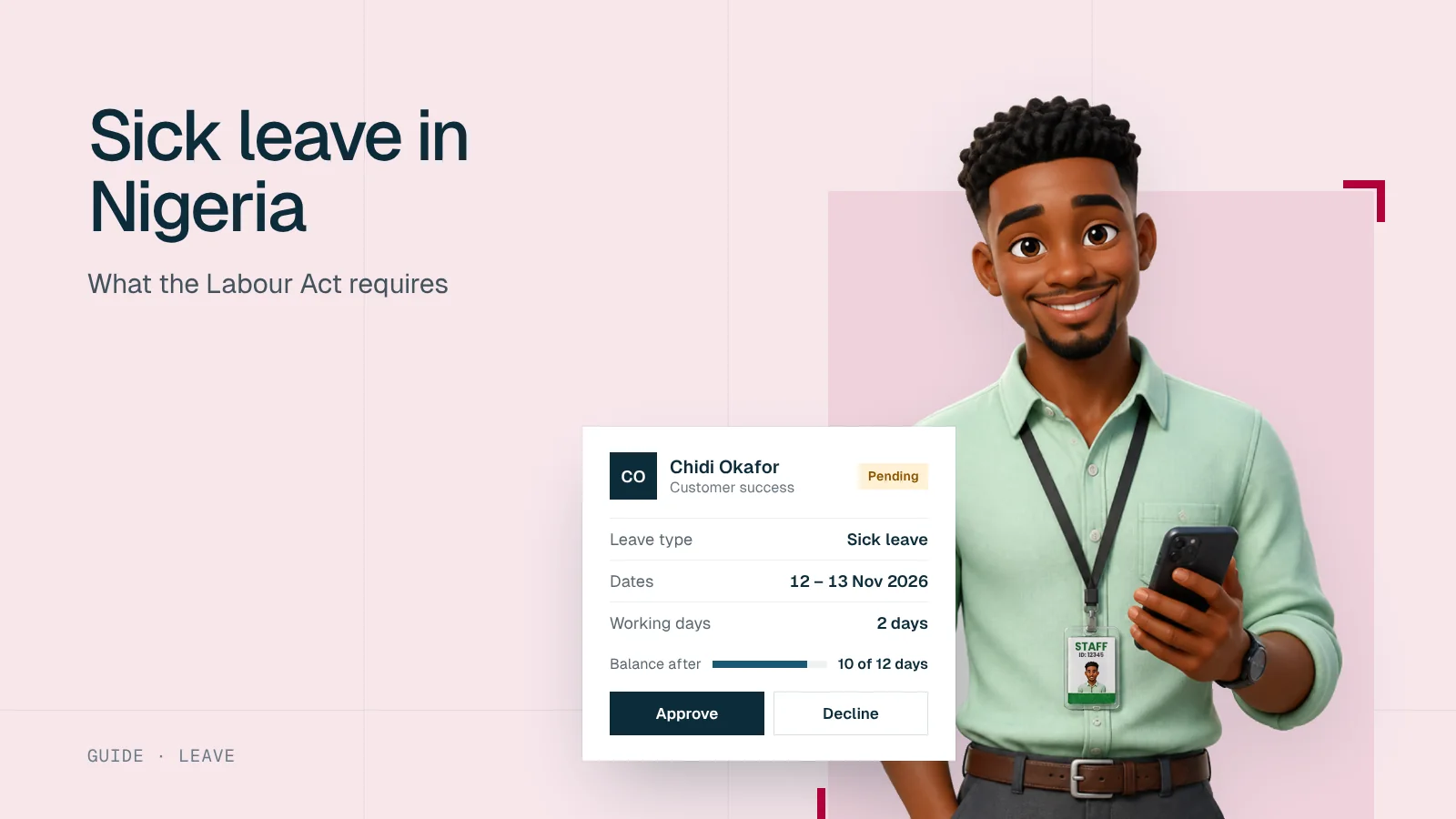
- Section 16 of the Labour Act entitles a worker to be paid for up to twelve working days a year of absence through temporary illness.
- The illness must be certified by a registered medical practitioner.
- If the employer asks, the worker must agree to be examined by a qualified medical practitioner the employer nominates.
- Injuries and diseases caused by work fall under the Employees' Compensation Act, not section 16.
Sick leave is the absence employers plan for least and deal with most. The Labour Act sets a short paid minimum with clear conditions, and leaves the rest to contracts and policies. This guide explains section 16, how to run sick leave fairly, and where work injuries and long illnesses fit.
Sick leave under the Labour Act
Source: Labour Act, section 16.
The entitlement
“Subject to the Workmen’s Compensation Act, a worker shall be entitled to be paid wages up to twelve working days” in any one calendar year “during absence from work caused by temporary illness certified by a registered medical practitioner.”
Labour Act, section 16
Three points follow from the wording:
- It is about wages. The worker is paid normally for up to twelve working days of certified illness in the calendar year.
- It covers temporary illness. Long-term conditions are handled through the contract and the employer’s policy.
- It needs certification by a registered medical practitioner.
As with other Labour Act protections, section 16 applies to “workers”, which excludes people in administrative, executive, technical or professional roles. Their sick pay depends on the contract. Applying one sick leave policy to everyone avoids awkward differences between grades.
The conditions
Section 16 attaches two conditions to the paid days:
- The contract remains in existence during the absence, and the worker is ready and willing to work apart from the illness.
- If the employer asks, the worker “consents to be examined by a qualified medical practitioner” nominated by the employer.
The second condition gives employers a fair way to deal with doubtful or repeated absences: ask for an examination by a doctor you choose, at your cost, rather than accusing the employee of lying.
Paying sick leave
During the twelve days, pay the employee as normal: same salary, same PAYE, same pension. If an employee is absent through certified illness for longer than the paid days in your policy, and the policy does not pay further days, deduct the unpaid days openly on the payslip.
| Example: certified illness of 15 working days in a year | Figure |
|---|---|
| Monthly pay | ₦200,000 |
| Paid sick days under the Labour Act | 12 |
| Unpaid days | 3 |
| Daily rate (₦200,000 ÷ 21 working days in the month) | ₦9,524 |
| Deduction for unpaid days | ₦28,571 |
Use the same daily-rate method your handbook sets for all unpaid absence. If your policy gives more paid sick days, the deduction applies only beyond them.
Running sick leave fairly
Handling a sickness absence
Report
The employee tells their manager as early as possible on the first day, by the method in the policy.
Certify
A medical certificate from a registered practitioner covers the absence, or self-certification for short absences if your policy allows it.
Record
The absence is recorded with dates, reason and certificate.
Return
A short return-to-work conversation checks the employee is fit and whether anything at work needs to change.
Review
Repeated or long absences trigger a review, with an examination by a nominated doctor if needed.
Accurate records matter for payroll and for fairness. Our staff attendance register has a code for sick days so they can be counted against the annual allowance.
Work injuries are different
An injury or disease that arises out of or in the course of employment falls under the Employees’ Compensation Act 2010 and the scheme run by the NSITF, which the employer funds with 1% of payroll. Report it as a work injury, not ordinary sick leave. See our NSITF guide for the reporting steps.
Long-term illness
The Labour Act gives no paid sick leave beyond twelve days. When an employee is seriously ill for weeks or months, the contract and handbook decide what follows: extended paid or half-paid sick leave, unpaid leave, or in the end a review of whether the employment can continue. Take medical advice, keep the employee informed in writing, and take legal advice before ending employment on health grounds.
Maternity is not sickness
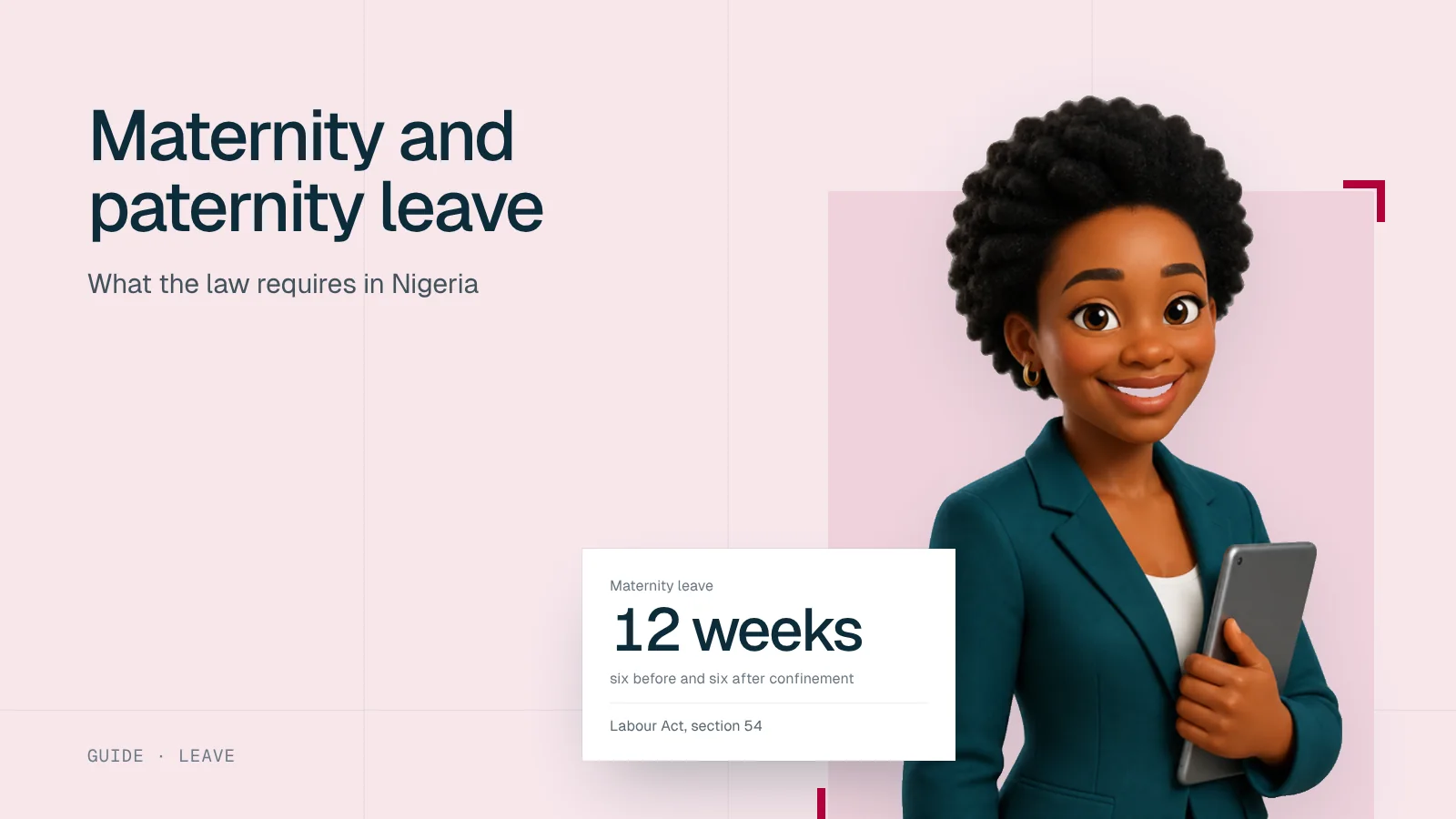
Absence for pregnancy and childbirth is covered by section 54 of the Labour Act, not by sick leave. See maternity and paternity leave.
Sick leave checklist
Policy
Each absence
Payroll
Ticks are saved in this browser only.
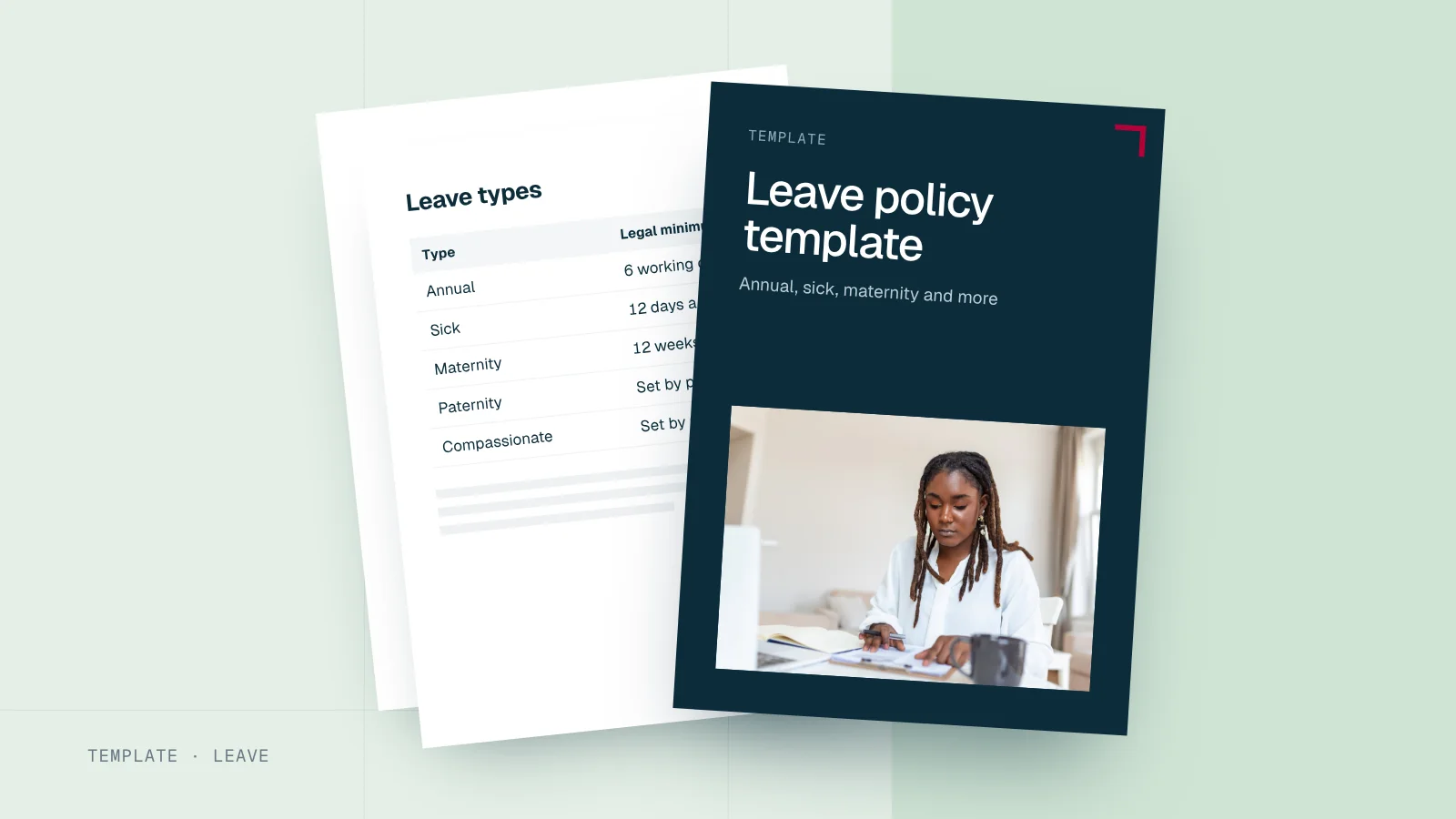
Sick leave sits alongside annual and maternity leave in a single policy. See our leave policy template.
Employee management made easy
Keep employee records, attendance, leave, payroll and performance in one connected system.
Written for: HR, employees
Employee management made easy
Keep employee records, attendance, leave, payroll and performance in one connected system.
Sources
Frequently asked questions
Short answers to what employers ask us most about this topic.
How many sick days are workers entitled to in Nigeria?
Up to twelve working days of paid sick leave in a calendar year under section 16 of the Labour Act, for temporary illness certified by a registered medical practitioner. Contracts can give more.
Do I need a doctor's note for sick leave?
For the statutory paid sick leave, yes. Section 16 refers to illness certified by a registered medical practitioner. Your employer's policy may allow short absences to be self-certified.
What happens after the twelve paid days are used?
The Labour Act does not require further paid sick leave. What happens next depends on the contract, the handbook and any collective agreement, which often provide more.