Key takeaways
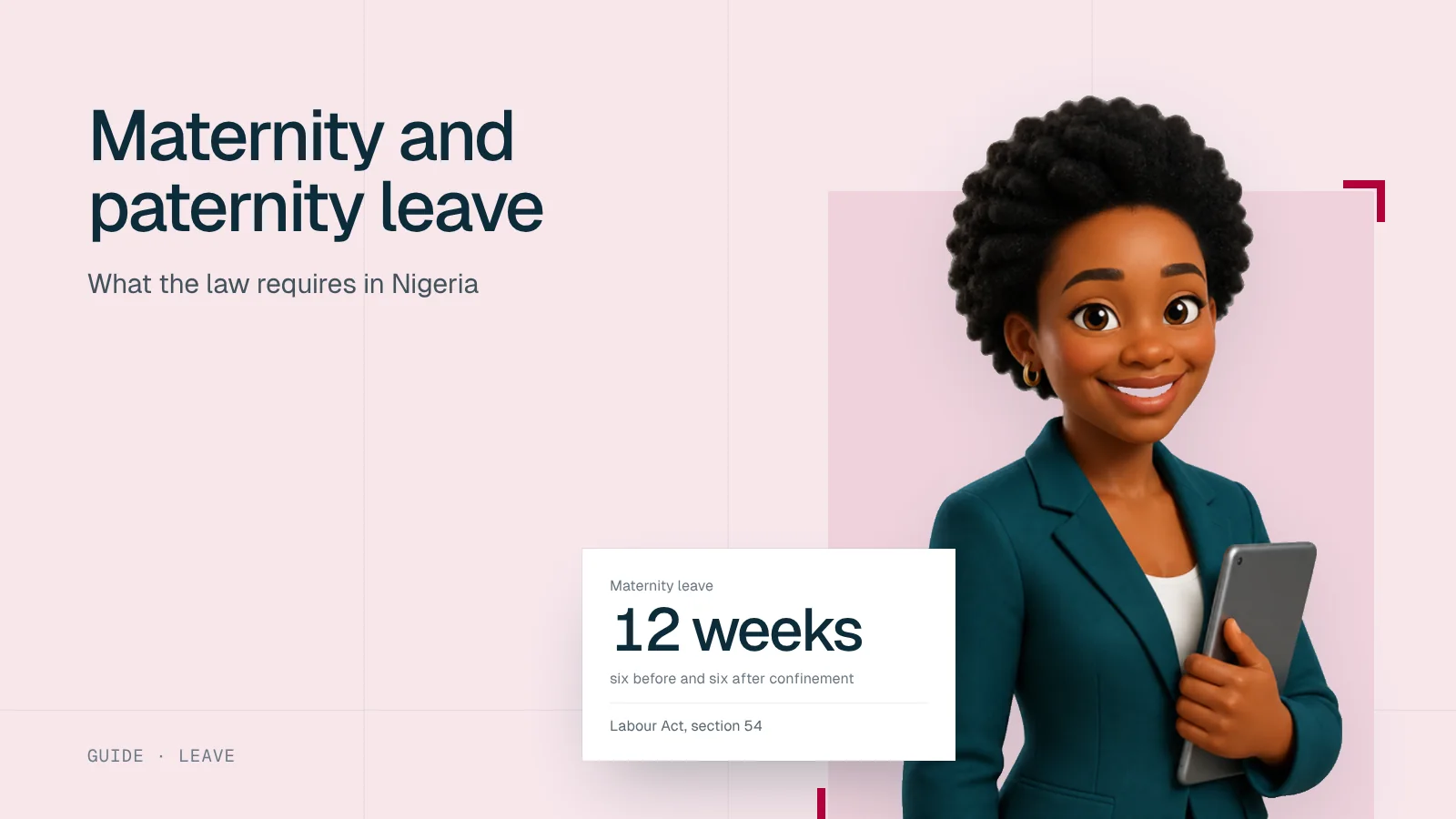
- Section 54 of the Labour Act allows a woman to stop work six weeks before confinement with a medical certificate, and bars her from working for six weeks after.
- A woman continuously employed for six months or more must be paid at least 50% of her wages during that leave.
- An employer may not give notice of dismissal during maternity leave.
- The Labour Act has no paternity leave. Federal civil servants have had 14 working days since November 2022.
Maternity leave is set by statute in Nigeria, but the statute is old and its minimums are modest, and employers are free to go further. This guide sets out the legal floor in section 54 of the Labour Act, the protections that come with it, and what the public service gives mothers and fathers.
Maternity protection under the Labour Act
Source: Labour Act, section 54.
The leave
Section 54 applies to women in industrial, commercial and agricultural work, public or private. It gives two linked periods:
- Before the birth: a woman “shall have the right to leave her work if she produces a medical certificate” from a registered medical practitioner stating that her confinement will probably take place within six weeks.
- After the birth: she “shall not be permitted to work during the six weeks following her confinement.”
Maternity leave under section 54
The minimum periods in the Labour Act.
- Up to 6 weeks before
Leave may start
With a medical certificate that confinement will probably occur within six weeks
- Confinement
Birth
Leave continues
- 6 weeks after
Earliest return to work
The Act bars work during this period
Pay during maternity leave
She “shall be paid not less than fifty per cent of the wages she would have earned” if she “had been continuously employed by her then employer for a period of six months or more.”
Labour Act, section 54(1)(c)
For a woman earning ₦300,000 a month who takes the full 12 weeks:
| Amount | |
|---|---|
| Normal pay for 12 weeks (₦300,000 × 12 ÷ 52 × 12) | ₦830,769 |
| Statutory minimum at 50% | ₦415,385 |
Section 54(2) says this pay rule applies whatever any minimum wage law provides. A contract can give full pay instead of half pay. Whatever your policy says, PAYE and pension continue on what is actually paid. Section 54(3) adds that an employer is not liable, as employer, for medical costs of pregnancy and confinement, although health insurance may cover them.
Protection from dismissal
“no employer shall give her notice of dismissal during her absence”
Labour Act, section 54(4)
The protection covers the maternity absence and any longer absence caused by an illness arising from the pregnancy or confinement, certified by a doctor. Notice that would expire during the absence is also prohibited. Our termination guide explains notice more generally.
Nursing breaks
A nursing mother “shall be allowed half an hour twice a day during her working hours for that purpose.” The breaks are in addition to normal rest intervals. Agree with her how they are taken, for example at the start or end of the day if she nurses at home.
Maternity leave in the public service
Federal and state public services set maternity leave in their own rules. Lagos State, for example, was reported in 2014 to have approved up to six months of maternity leave for its public servants. Check the current rules for the service concerned before relying on any figure.
Planning the leave and the return
The legal rules are the minimum. A few practical steps make maternity leave smoother for everyone:
- Agree the dates in writing as soon as the employee shares her expected date of delivery and medical certificate.
- Plan cover early, with a handover document and a named colleague for urgent matters.
- Agree how you will keep in touch during leave, and keep contact light and optional.
- Set up payroll correctly. Pay at the agreed rate for the leave period, and run PAYE and pension on what is actually paid.
- Hold a return-to-work meeting to update her on changes, agree the nursing breaks and any phased return.
Put these steps in your leave policy, so every manager follows the same process.
Paternity leave
The Labour Act gives fathers no leave. In the federal public service, a circular from the Head of the Civil Service introduced paternity leave from 25 November 2022:
| Federal civil service paternity leave | Rule |
|---|---|
| Length | 14 working days |
| Who | Male officers whose spouse gives birth, or who adopt a child under four months old |
| How often | Once in two years, for up to four children |
| Evidence | The expected date of delivery report, or proof that the adoption was approved |
Lagos State was reported in 2014 to give its male public servants 10 working days. Private employers are free to offer paternity leave, and a written policy avoids case-by-case decisions.
Maternity checklist for employers
When she tells you
During leave
On return
Ticks are saved in this browser only.
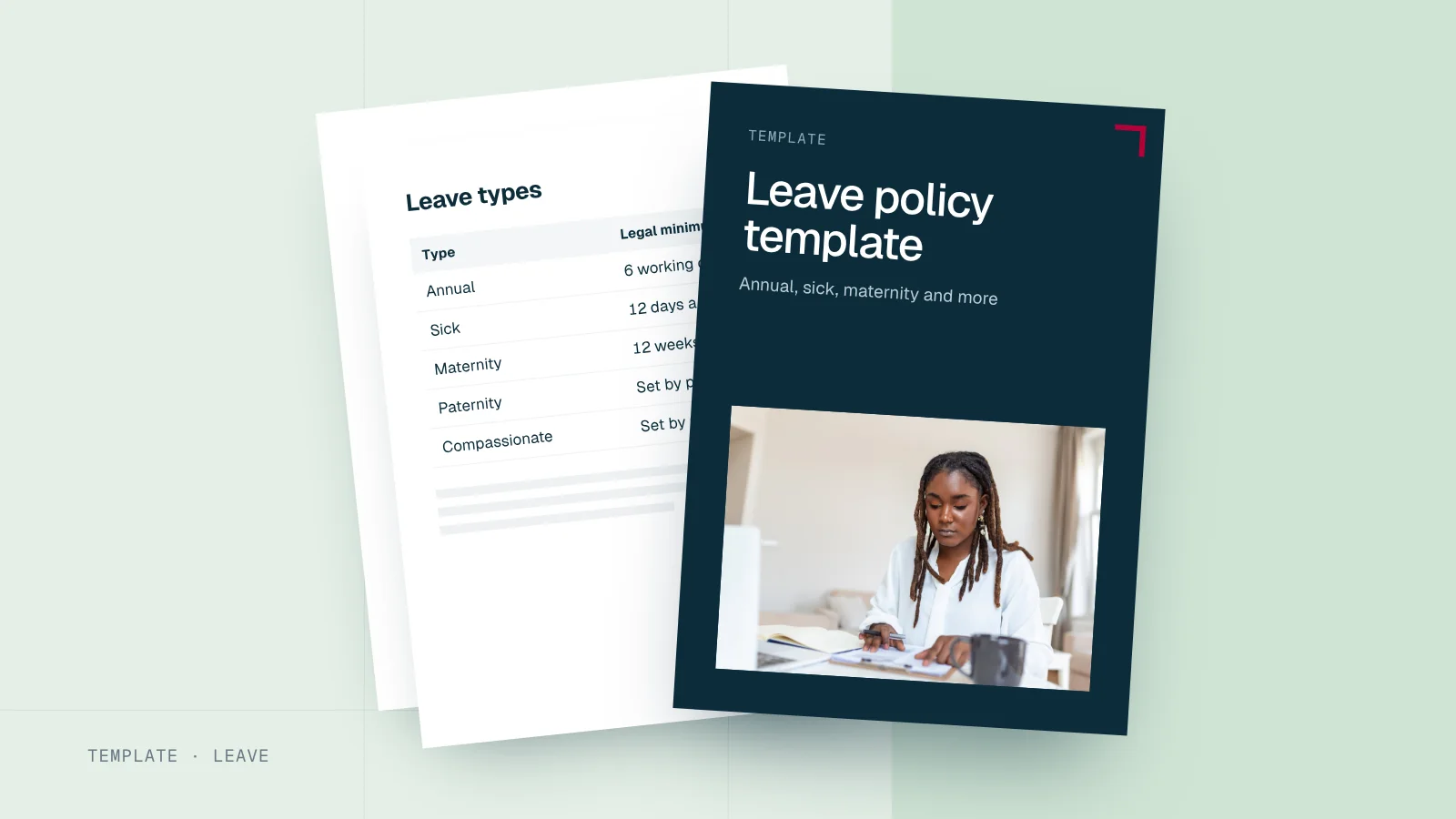
Put your maternity, paternity and other leave rules in one document. Our leave policy template includes sections for both.
Employee management made easy
Keep employee records, attendance, leave, payroll and performance in one connected system.
Written for: HR, employees
Employee management made easy
Keep employee records, attendance, leave, payroll and performance in one connected system.
Sources
Frequently asked questions
Short answers to what employers ask us most about this topic.
How long is maternity leave in Nigeria?
Under section 54 of the Labour Act, up to 12 weeks: the six weeks before confinement, with a medical certificate, and the six weeks after, when she may not work. Employers and the public service can give more under their own policies.
Is maternity leave paid in Nigeria?
Yes, if the woman has been continuously employed for six months or more before the leave. The Act requires at least 50% of the wages she would have earned. A contract can provide full pay.
Is there paternity leave in Nigeria?
Not under the Labour Act. The Federal Government approved 14 working days of paternity leave for federal civil servants from 25 November 2022. Private employers can offer paternity leave in their own policies.