Nigerian employment law for employers
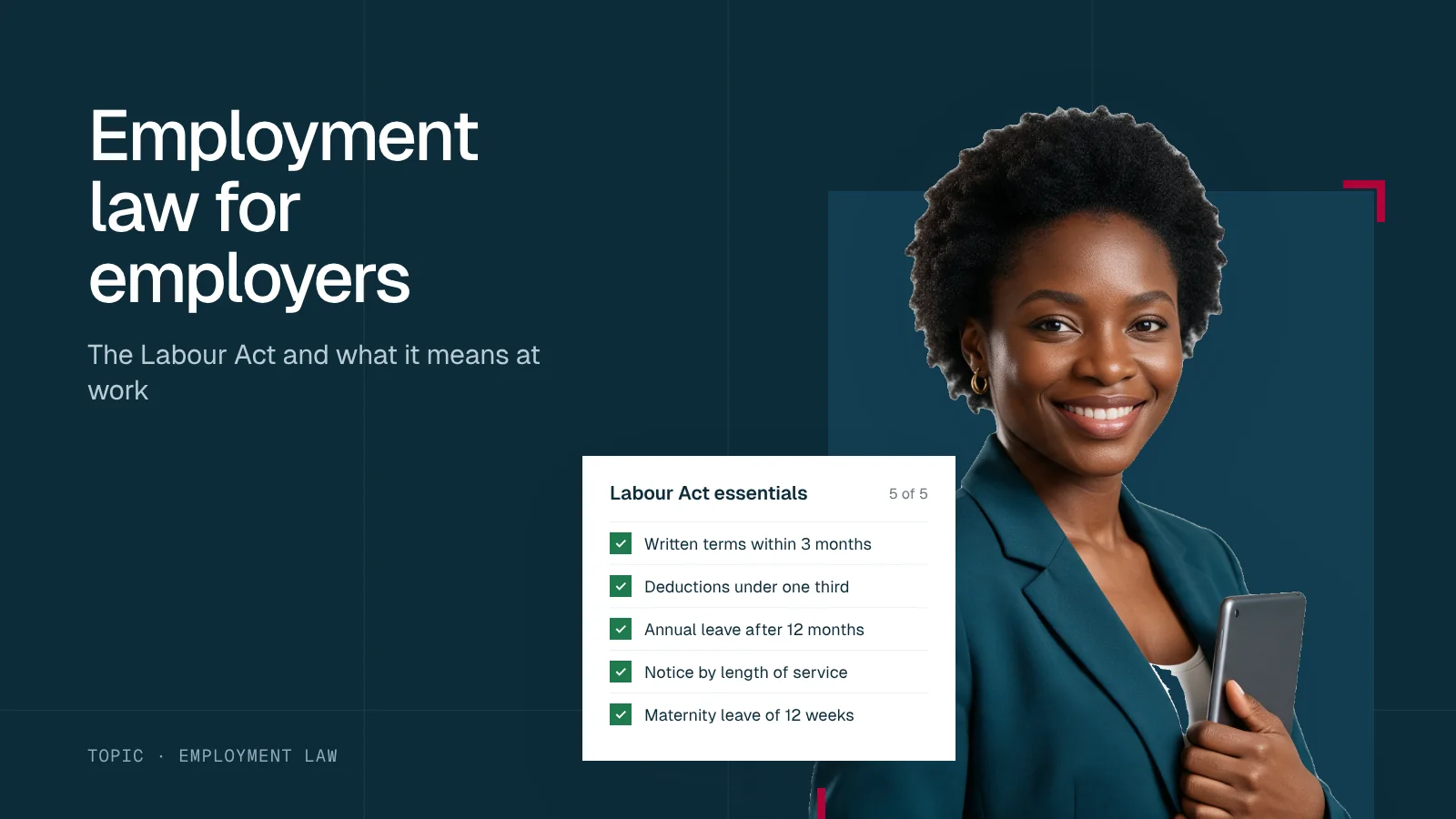
Most employment questions in Nigeria start with the Labour Act and end with the contract. These guides explain what the Act requires, how the courts have applied it, and how to handle the moments that carry the most risk: discipline, termination, redundancy and final pay.

Most employment questions in Nigeria start with the Labour Act and end with the contract. These guides explain what the Act requires, how the courts have applied it, and how to handle the moments that carry the most risk: discipline, termination, redundancy and final pay.
Start here
- The Labour Act explained: who it covers and what it requires
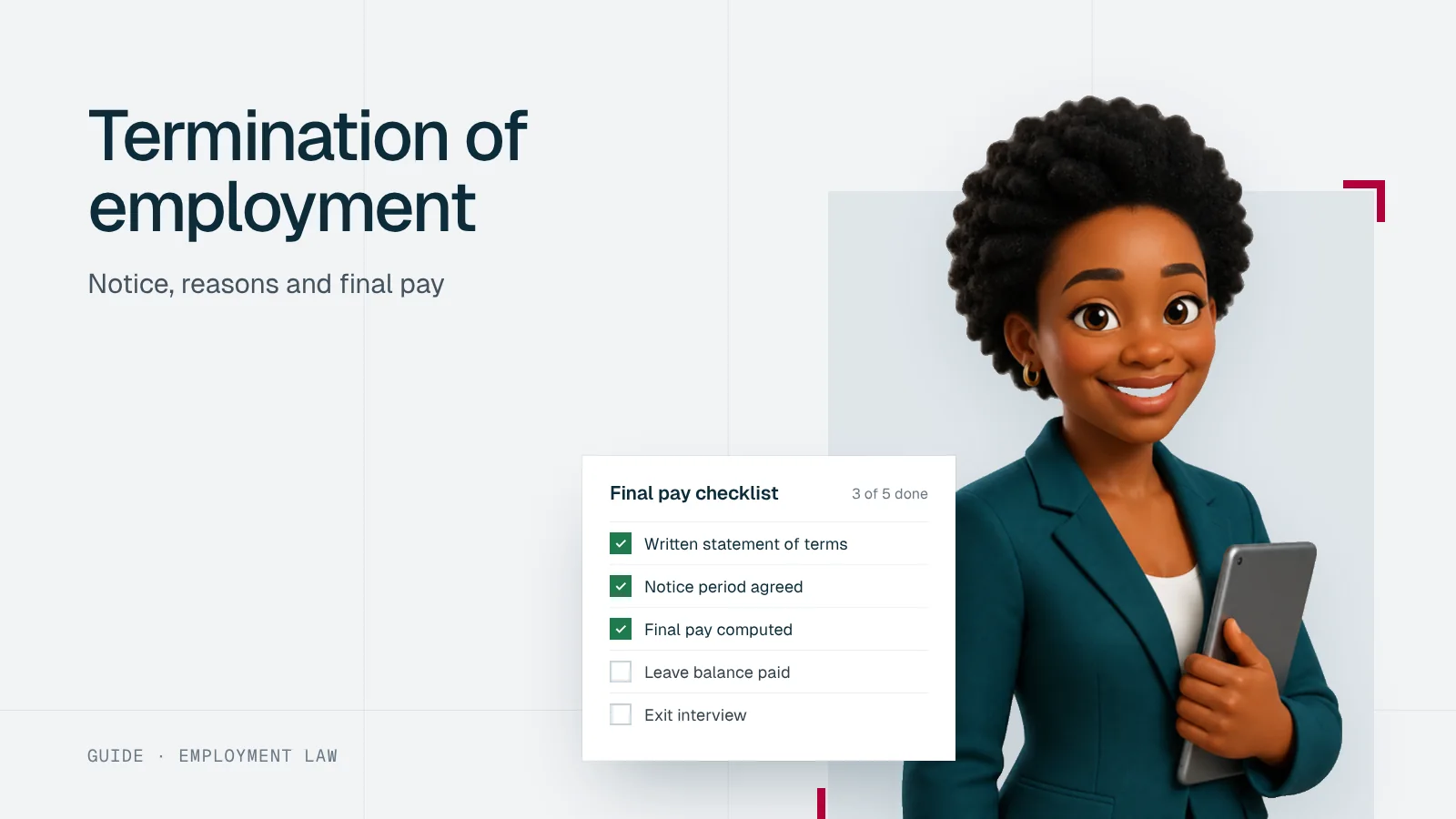
- Termination of employment: notice, reasons and final pay
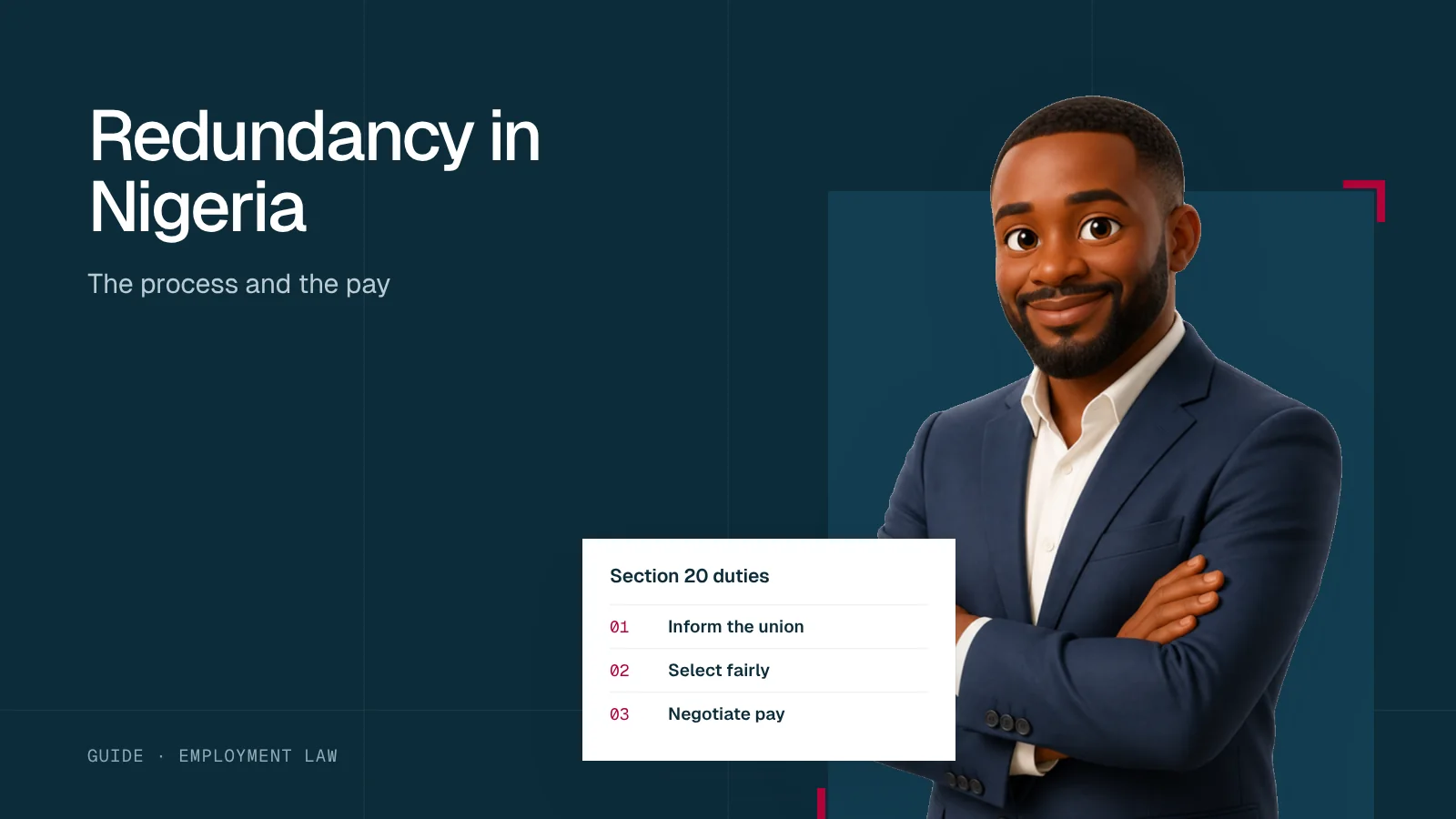
- Redundancy: the section 20 process
- Gratuity: formulas and a free estimator
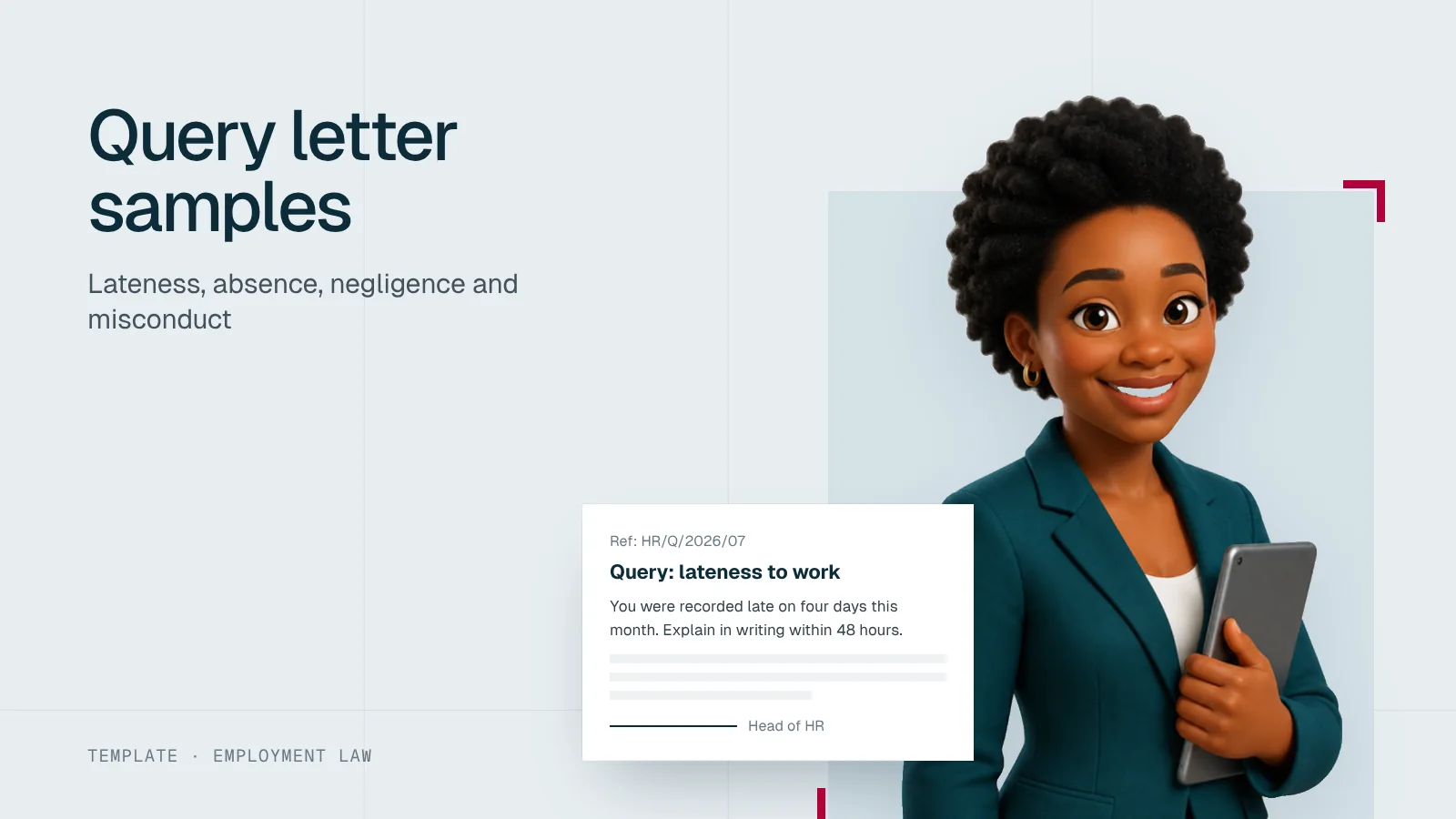
- Templates: query letters and employment letters
These guides explain the law in general terms. Take legal advice on a contested case. All the guides in this section are listed below.
Guides in this section
- Gratuity in Nigeria: how it is calculatedGratuity is not required by statute for private employers, so the contract decides. This guide explains the usual…
- Nigerian Labour Act explained for employersA section-by-section guide to the Labour Act for employers: who counts as a worker, written terms, wages and…
- Redundancy in Nigeria: process and payA step-by-step guide to redundancy for Nigerian employers: what section 20 of the Labour Act requires, how to…
- Termination of employment in Nigeria: notice, reasons and final payA guide for Nigerian employers on ending employment: minimum notice under section 11 of the Labour Act, pay…
Employee management made easy
Keep employee records, attendance, leave, payroll and performance in one connected system.